During two whirlwind days of visits to museums, poignant exhibits, breathtaking sculpture gardens, and other historic sites in Selma, Montgomery and Birmingham, Alabama, Kay and I went on an eye-opening trip back in time last weekend. It was an emotional learning experience like few I’ve ever known.
We knew this trip would touch us deeply, but we had no idea it would be to such a degree. It almost felt as if we witnessed for ourselves the disturbing, tumultuous, violent events we spent the trip reading, viewing and hearing about in countless photos and other images, quotations, newspaper clippings, audio, video and sculptures, reliving the racial injustices and racial terrorism so ubiquitous in our country’s ugly past.
Maybe I’ve just forgotten because it was so long ago, but it seemed like a classic case of “they didn’t teach us this stuff in school.”
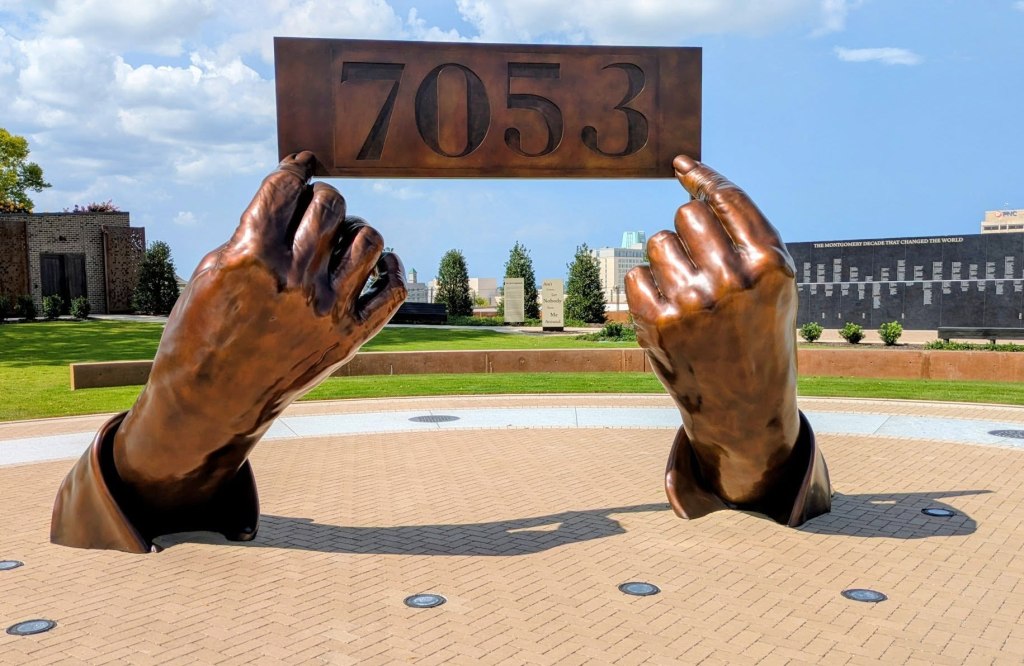
Most of the places we toured were in Montgomery, the capital of Alabama and where we stayed after the 12-hour drive from Arlington. We immersed ourselves in vast amounts of information about Black Americans’ unending, torturous struggle for civil rights and voting rights. The unspeakable horrors of centuries of slavery – over 12 million people taken from Africa to be enslaved in the Western Hemisphere with generations of their descendants, and nearly 2 million dying in transit on the Atlantic Ocean in deplorably inhumane conditions.
Montgomery, we discovered, with its rail lines and the Alabama River making it a major inland port, served as a primary hub and capital of the domestic slave trade during the mid-19th century, with numerous slave trading depots and auction houses.
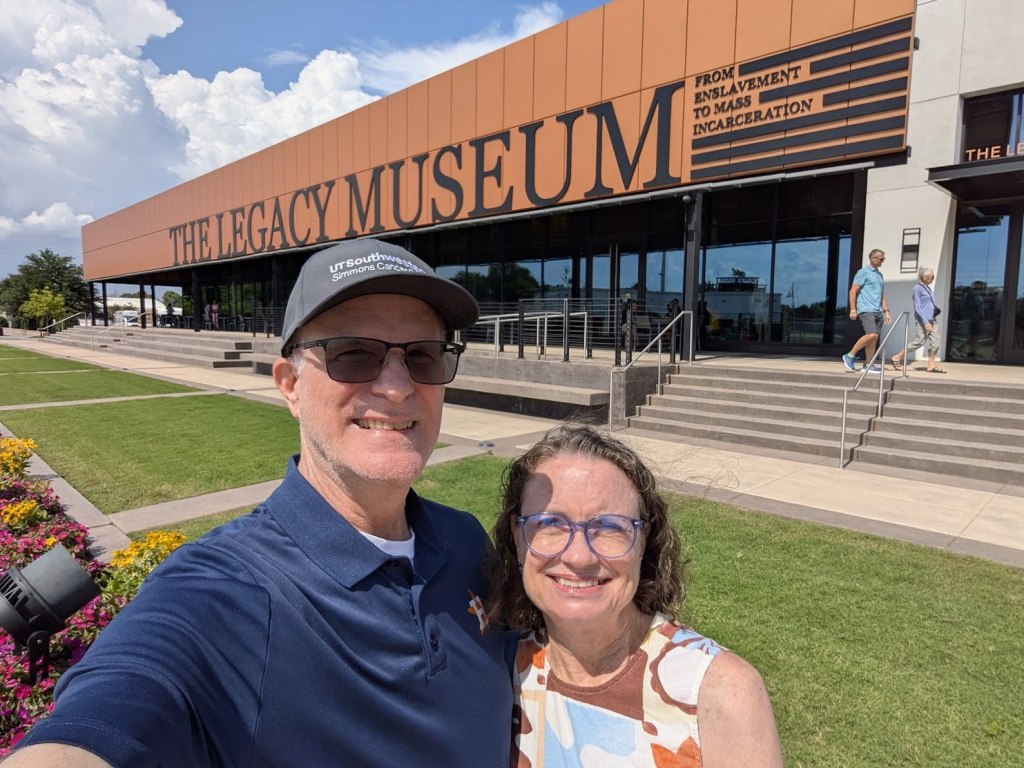
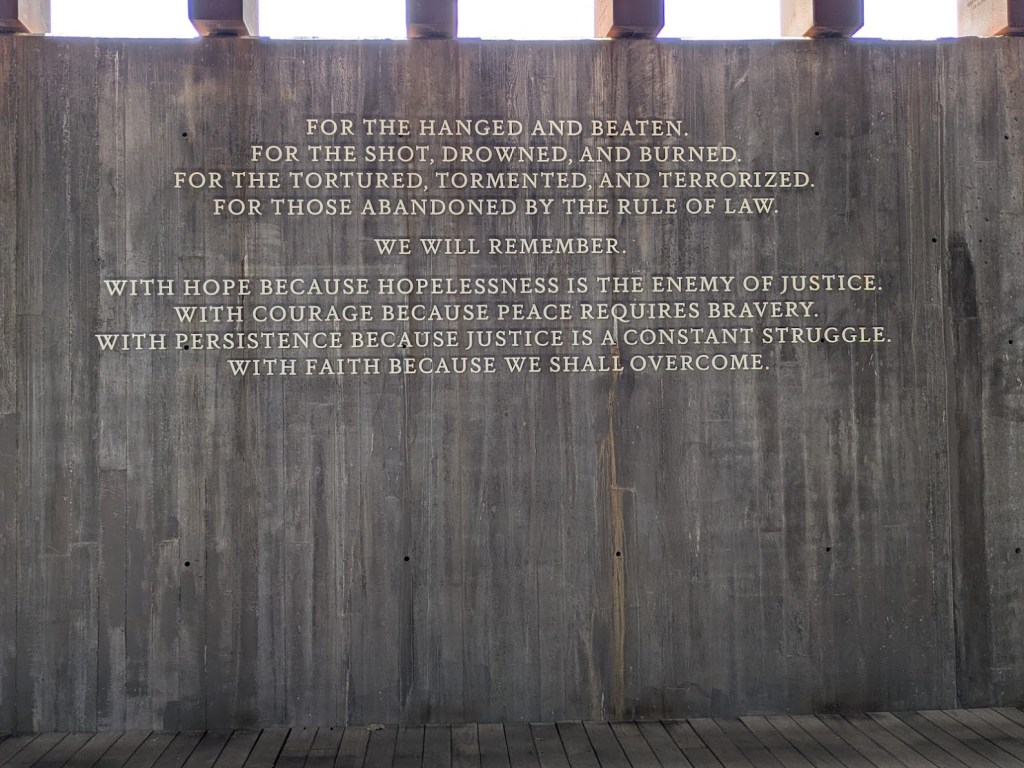
I learned sad, sickening truths about our nation’s long reign of white supremacy – a reprehensible ideology that exists to this day – and the intense, unabating hatred that once flowed through the veins of most white Americans toward anyone with another skin color. As we saw at the Legacy Sites – four venues sponsored by nonprofit legal organization the Equal Justice Initiative (EJI) at different locations in Montgomery and dedicated to shedding light on these abominable pieces of our history – that prejudice grew stronger after the Civil War and intensified well into the 20th century.
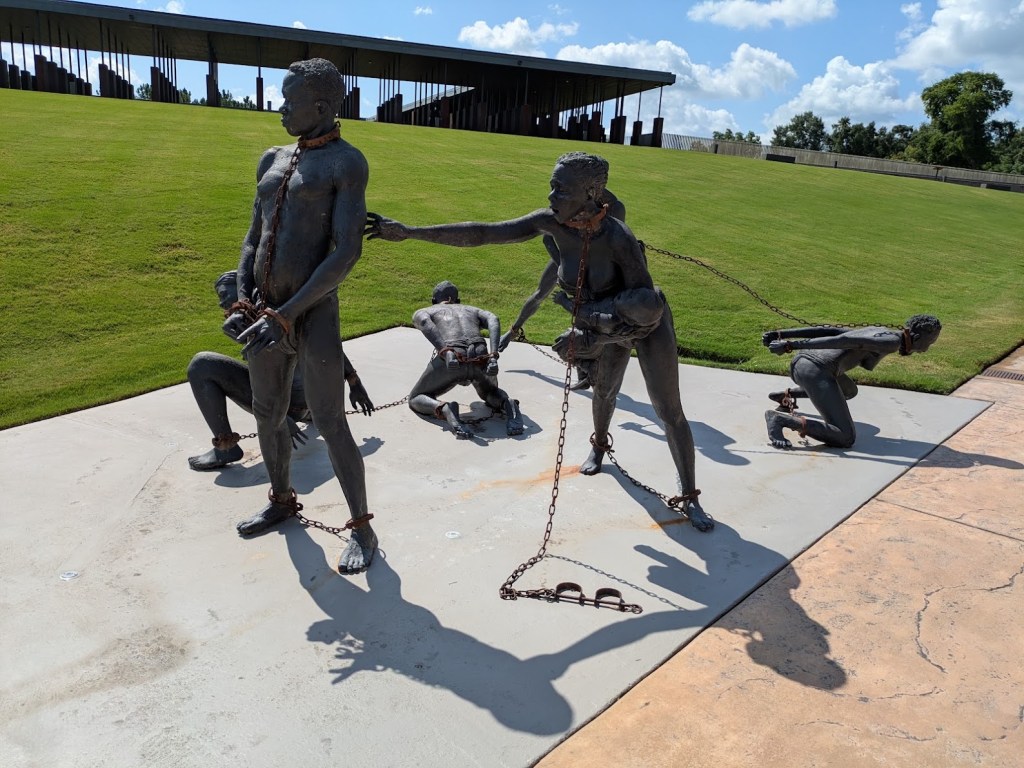
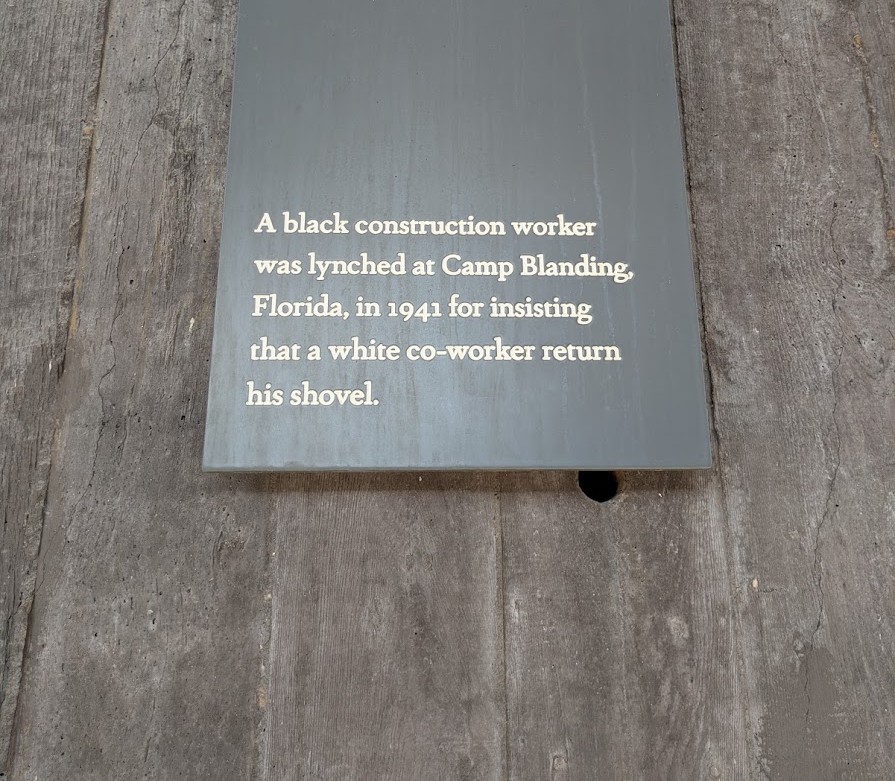
Millions of Black Americans in the Deep South were targeted in lynchings – hangings, burnings, shootings, drownings, stabbings, beatings – that began after the Civil War and continued, unbelievably, into the 1950s. These killings, sanctioned by law enforcement and elected officials, were intended to terrorize Blacks and enforce racial hierarchy, re-establishing white supremacy after the war.
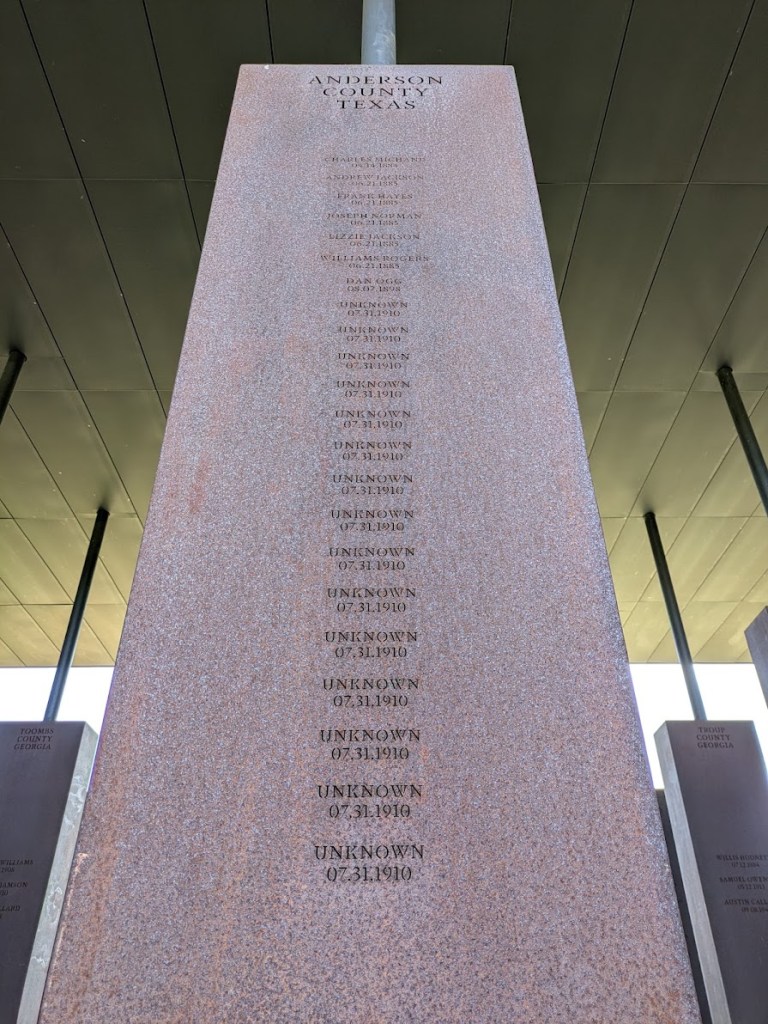
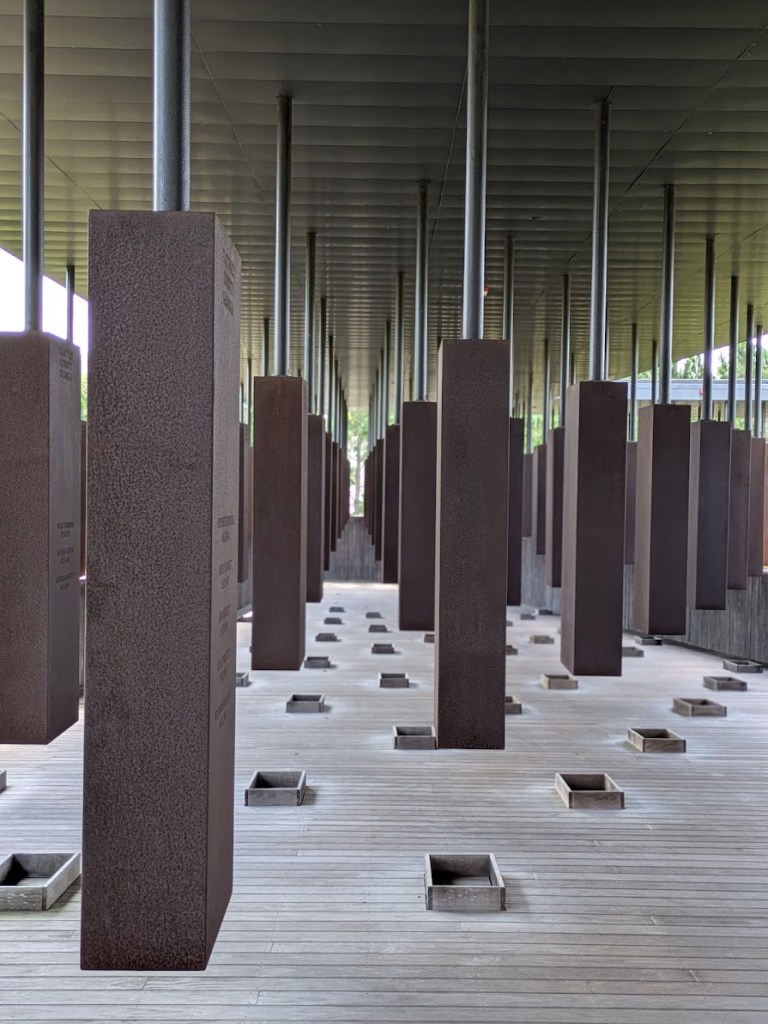
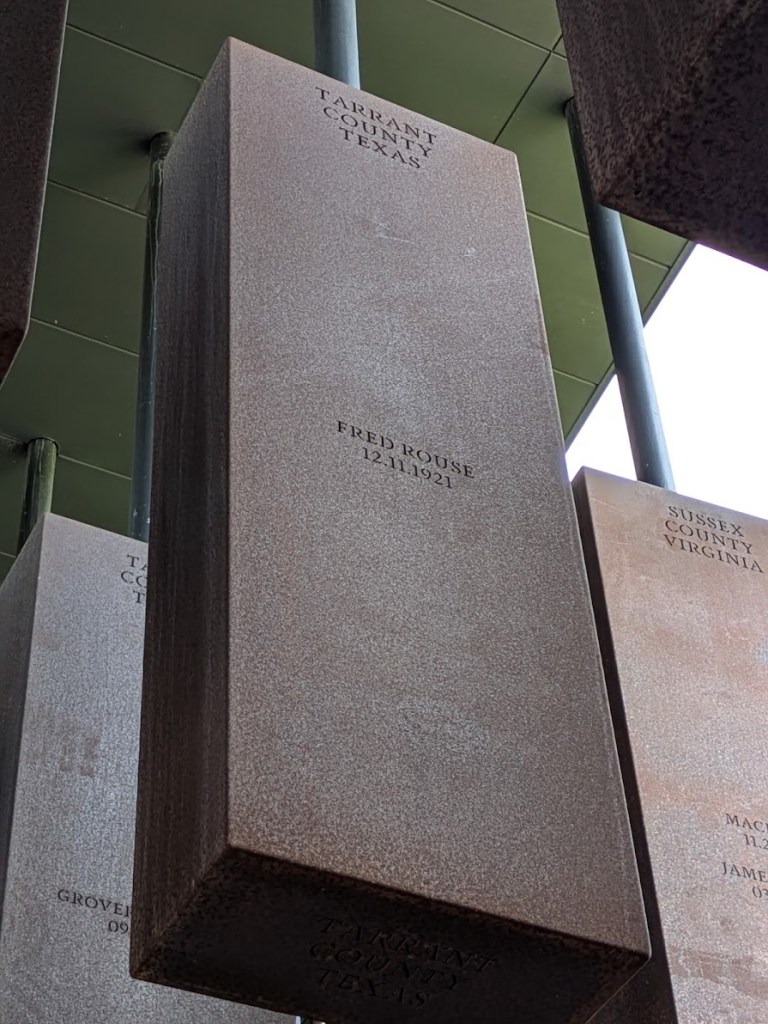
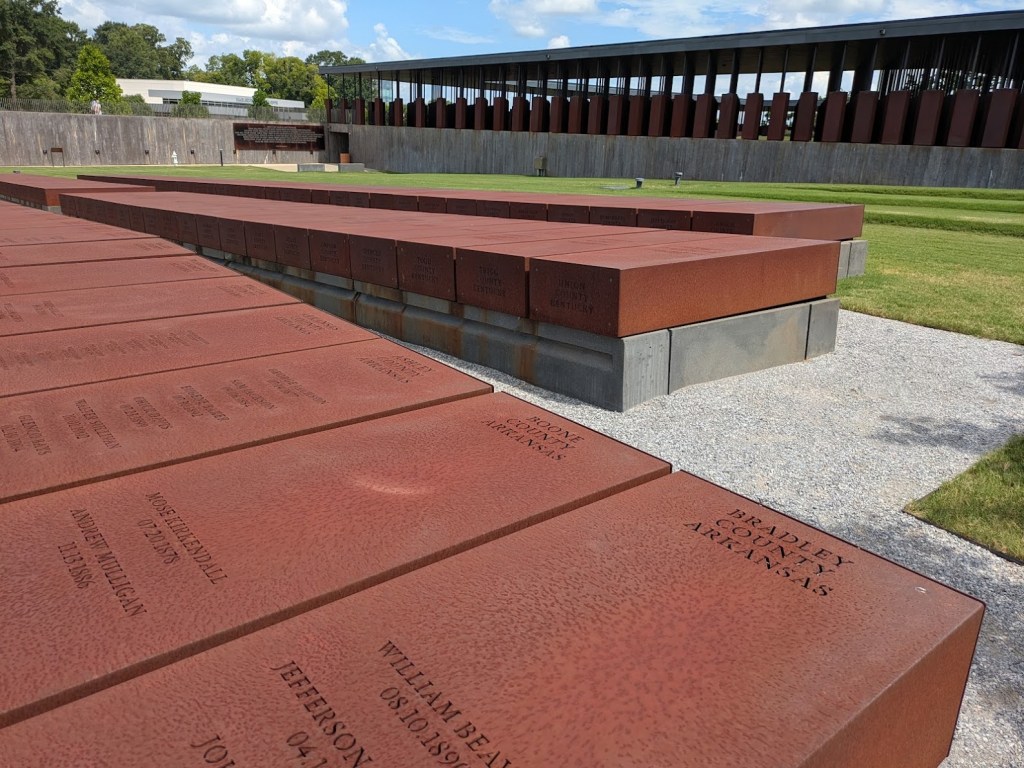
Of the Legacy Sites, the outdoor National Memorial for Peace and Justice was the most jarring for me. It’s the first U.S. memorial dedicated to over 4,400 Black Americans documented to have been murdered in lynchings between 1877 and 1950, their names engraved on more than 800 steel monuments – one for each county where a lynching occurred. And that’s a small fraction of the true number, since untold numbers of lynchings went undocumented. I counted the number of counties from our state of Texas at a staggering 98. Sadly, many victims honored in the exhibit are listed as “Unknown.”
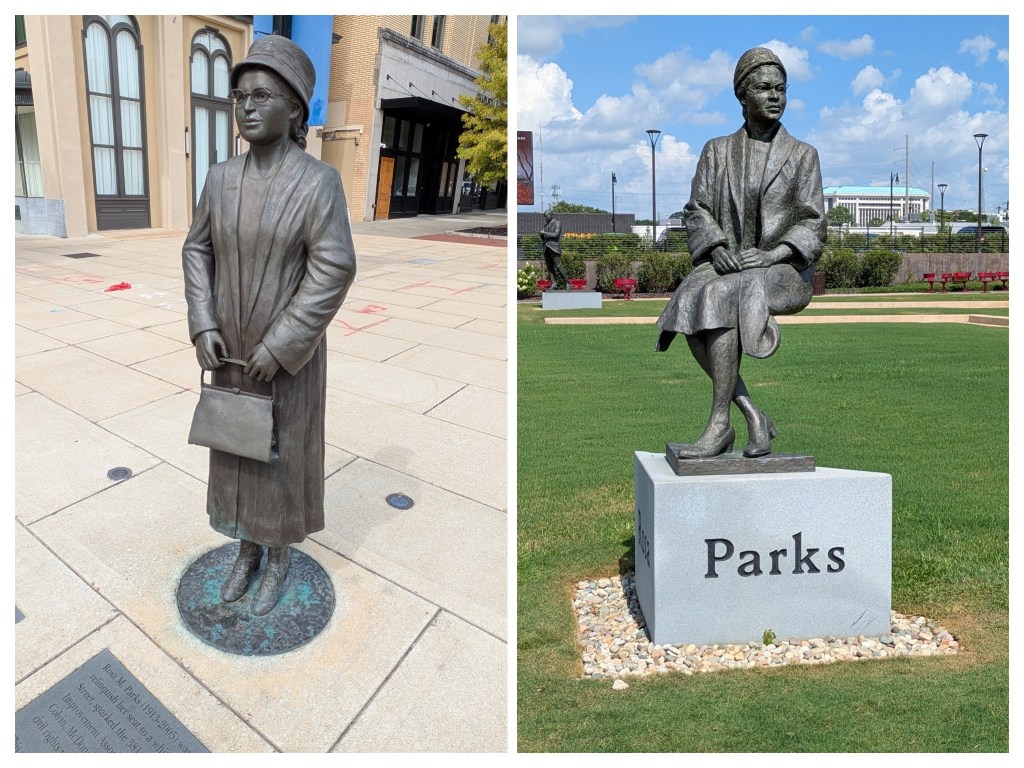
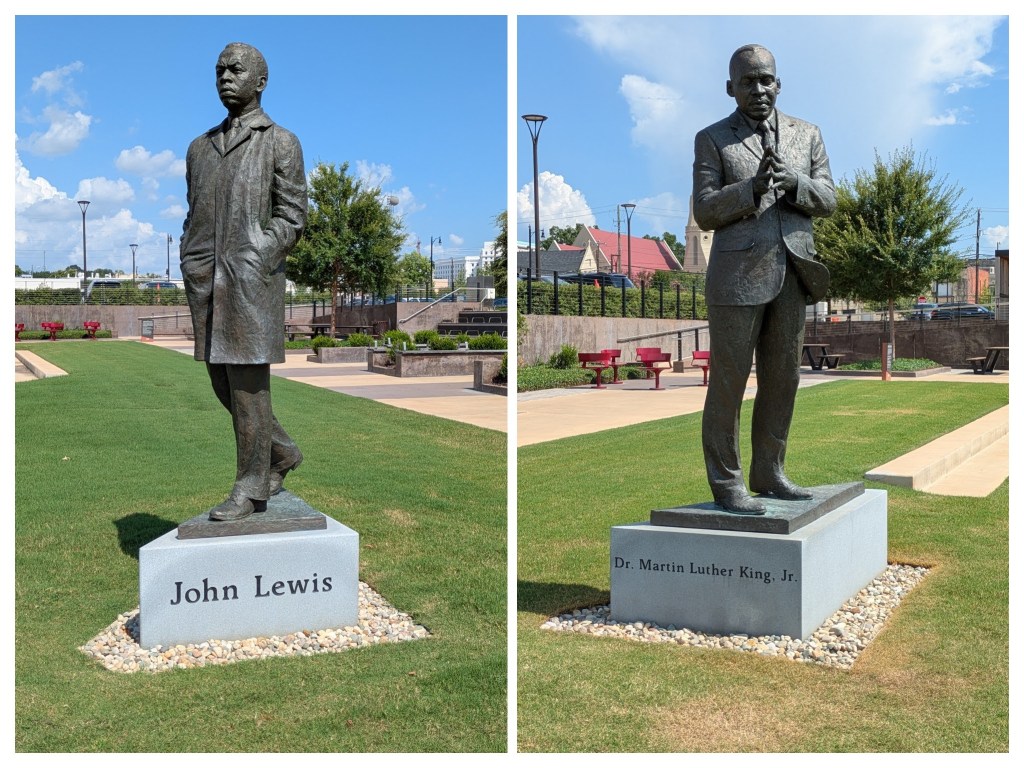
I also now know more than I ever did about the Montgomery bus boycott of 1955-56, which started the civil rights movement. It was led by the Rev. Martin Luther King Jr. – who lived in Montgomery from 1954 to 1960 and preached at Dexter Avenue Baptist Church – and its genesis was the courage of the remarkable Rosa Parks, who refused to give up her bus seat to a white passenger on Dec. 1, 1955, and was arrested. We visited the Rosa Parks Museum on the Montgomery campus of Troy University.
Exhibits also opened my eyes to details about the brutal beatings suffered by Black and white Americans attempting to cross the Edmund Pettus Bridge in Selma in March 1965 on their way to the state Capitol in Montgomery to make their case for the voting rights no American should ever have been deprived of. At the start of our trip, Kay and I stopped in Selma and walked the bridge, a moving experience for both of us.
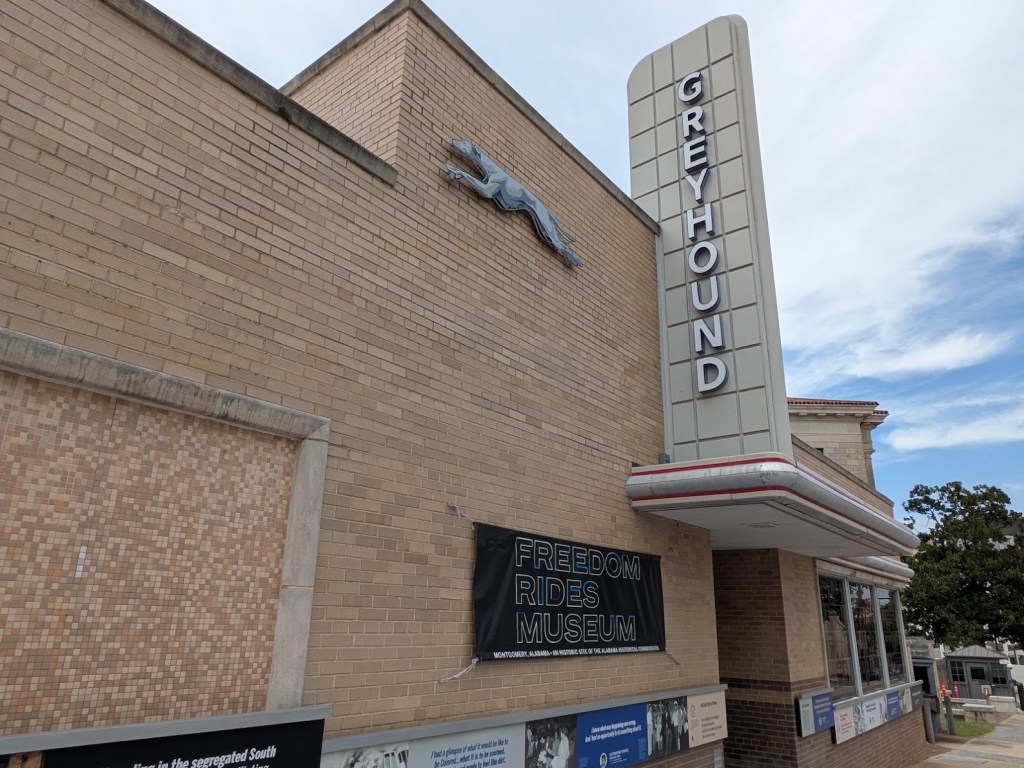
Then there were the Freedom Rides of 1961 (the year I was born), during which Black and white Americans were also attacked while challenging segregation on interstate buses and in bus terminals. We read at length about those brave patriots at the Freedom Rides Museum inside the former Greyhound bus terminal in Montgomery.
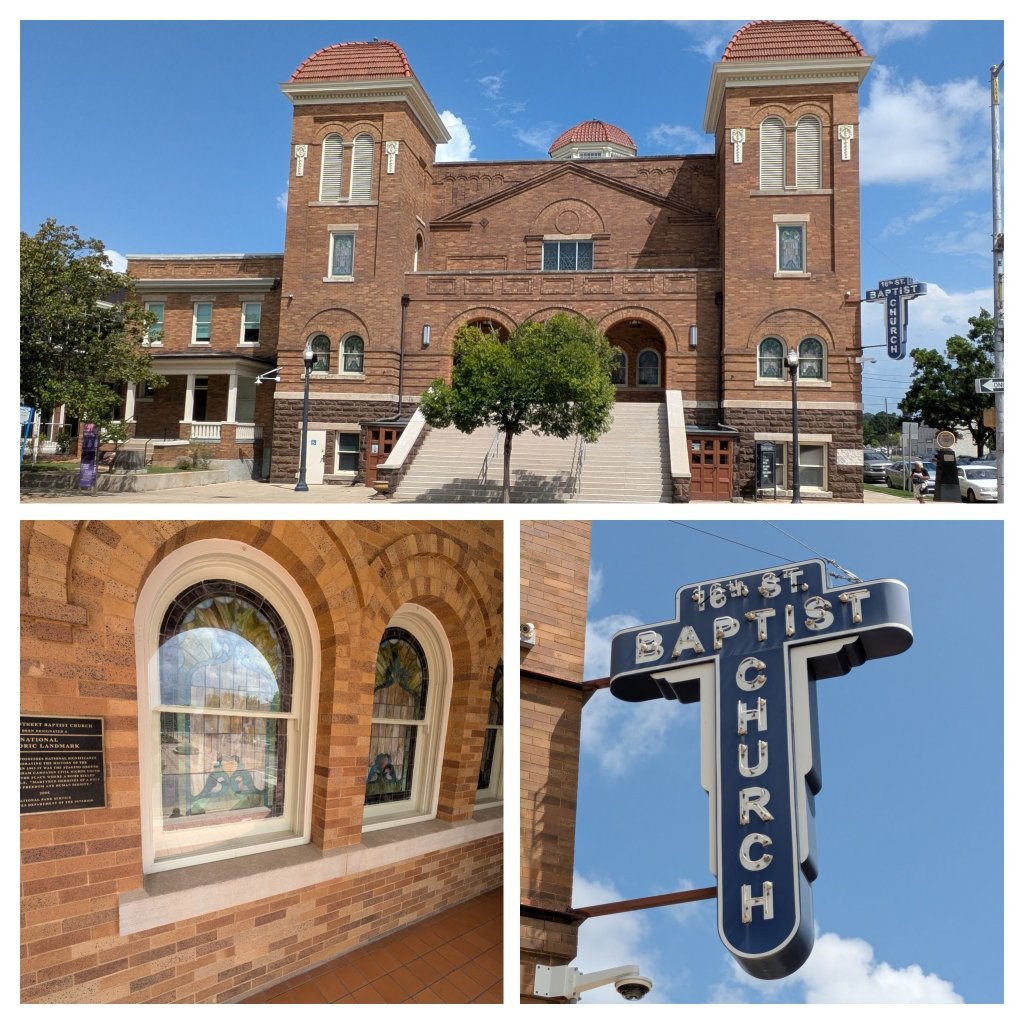
When we drove to Birmingham to visit friends Sunday, we went to the 16th Street Baptist Church, where a bombing by Ku Klux Klan members in 1963 killed four young Black girls. As I walked up the front steps, Sunday morning’s service was about to start. I stood outside the doors, listened to the beautiful music being sung inside, and said a prayer for all the families affected by the horrendous events of Sept. 15, 1963. After I walked back down, a man getting out of his truck invited me (Kay was exploring on another street) to attend the service. I thanked him and said we’d love to but had lunch plans.
We made the all-day drive home Monday after an eventful, memorable trip during which we saw most of what we’d hoped to. Montgomery, Alabama, was never on my list of desired places to visit, but as I told Kay, I’m so glad we made this trip. What we learned, what we saw, what we felt and what we came away with were immeasurably educational and invaluable lessons about innumerable atrocities committed by our fellow Americans against fellow Americans over the course of our country’s history.
If you’ve never been to Montgomery and ever have a chance to go there and take in these sites, you shouldn’t hesitate. If you’re ever driving through Alabama, don’t think twice about detouring to Montgomery to witness what we did. It’s history every American should know more about, see up close, and take time to pay respects to the millions of our fellow countrymen against whom these injustices have been perpetrated.
Without question, the experience will have a deeply profound impact on you.


Thank you. This is something I’ve long wanted to do. I’ll take this as a guide.
LikeLiked by 1 person
Hi Mike and thank you. I hope y’all are able to make the trip. Definitely worth it.
LikeLike
If you were driving in the Birmingham area, or along I-20 in Alabama, you may have passed the property that flies a gigantic Confederate battle flag.
Racism is not a thing of the past, not in the South and no elsewhere in America.
LikeLiked by 1 person
Hi, remind me who this is? 😊 Wow, we did not see that Confederate flag. And I certainly didn’t mean to imply racism doesn’t exist anymore. It is definitely still rampant. Just saying these exhibits provide a powerful look at our history when it comes to racism.
LikeLike